Ted Turner the Sailor

This was a man who knew how to sail a boat, and he sailed a variety of them to victory.
By the way, do you still sail?

No, I’m a fly fisherman. I’m your neighbor up in Montana. When are you gonna come see me?

So began the sailing segment of Ted Turner’s appearance on Late Night with David Letterman awhile back. When? I dunno. Letterman’s YouTube Channel reposted a portion upon Turner’s passing at age 87. You can look it up based on Turner’s book that was out at the time, “Call Me Ted.”

I saw it live when it first appeared. I got all excited, because I fully expected Letterman to tell Turner he was a sailor himself. How did I know this?

David Letterman went to our sailing school in the 1970’s! No, he wasn’t as famous then – it was “Late Morning with David Letterman” at the time, but everyone knew who he was. I was a kid, but I still remember him decked out in the yellow foul weather gear we sold at cost to students for wet weather, grinning after coming in out of the elements post-class one day. But, he never brought it up in the segment. Damn…

Turner had quite a life. “My whole life has been a sea of trouble,” he quipped on the show. It wasn’t without its trials and tribulations. But it was also peppered with success. A lot of it. Most people know he started CNN, owned the Atlanta Braves, etc. Everyone knows he wasn’t afraid to speak up. But, did you know he was quite the conservationist? As the 4th largest private land owner in the country, I’m sure a good chunk of that was purchased toward that end. And, yes – I’m sure he did some fly fishing on some of that land.

IN THAT PIC: Letterman holding a photo of Turner on one of the America’s Cup boats.

Turner’s sailing career started out inauspiciously, apparently. He sailed Penguin dinghies and earned the nicknames “Turnover Turner” and “The Capsize Kid.” That means he flipped the boat a lot and wound up in the water. But, he improved. Soon, he was successful at the regional and national levels, including a hot streak at Brown University, where he captained the sailing team.

Turner put together one of the most impressive racing resumes of all time. It wasn’t how many Olympic medals he won (none, and didn’t get to the Olympics). It wasn’t the number of world championships he won (a handful; impressive of course). It was the broad spectrum of sailboats he was successful in, and the types of races he won:

  • Small dinghies (whatever he raced at Brown for example)
  • Large dinghies (Flying Dutchman world champ)
  • Small one-design keelboats (5.5 Metre Gold Cup/World Champ)
  • America’s Cup semi-one design keelboats (won one of three Cup campaigns)
  • Ocean racing: plenty of accolades here, but most impressive?

That would be the Fastnet Race of 1979. This is an annual offshore regatta off the British Isles. In ‘79, a bad storm popped up and caught the whole fleet by surprise. The goal becamse survival, and finishing the race was very optional. Fifteen sailors died in that storm. Many boats were rendered helpless. I forget what percentage of starters actually finished, but you can look that up for yourself. Two impressive finishers: John Rousmaniere, author of The Annapolis Book of Seamanship (a must-have broad-spectrum sailing reference in my not-so HO), and Ted Turner. “Captain Outrageous,” as he was sometimes called, won on corrected time in the yacht “Tenacious.”

I was in two storms that I wasn’t sure we’d make it.

-one was the NY to Hatteras, mentioned on the Letterman Segment. The other wasn’t mentioned, but was almost surely the ‘79 Fastnet.

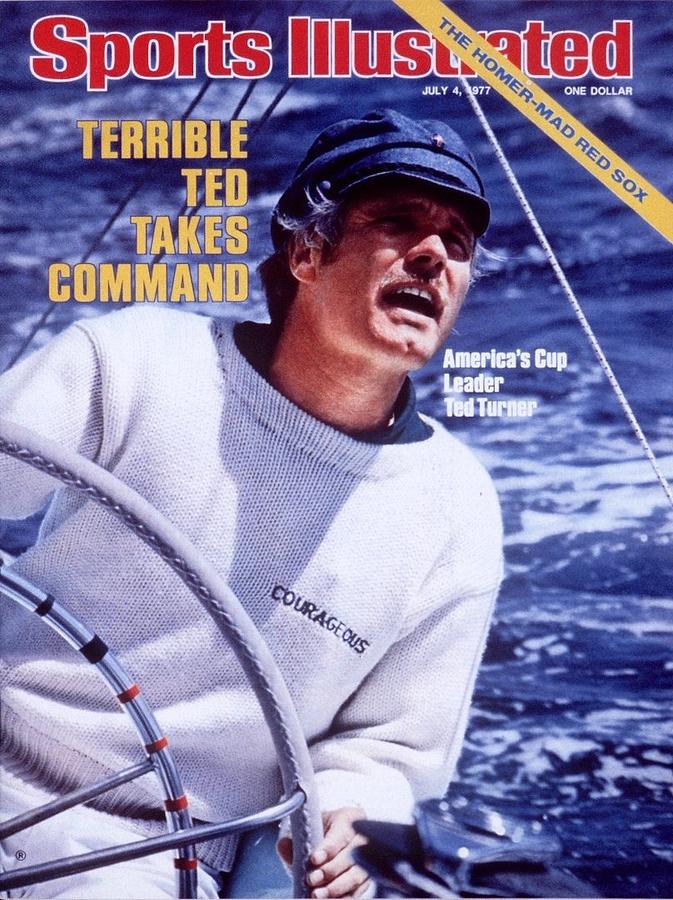
The Americas Cup is the oldest contest in the wide world of sports. Turner won in 1977, making the cover of Sports Illustrated. He competed in the trials for the Cup events before and after this one, but didn’t win. No matter. He won in ‘77, and whether it’s a tough trials, a tough Cup, or both, it’s commendable.
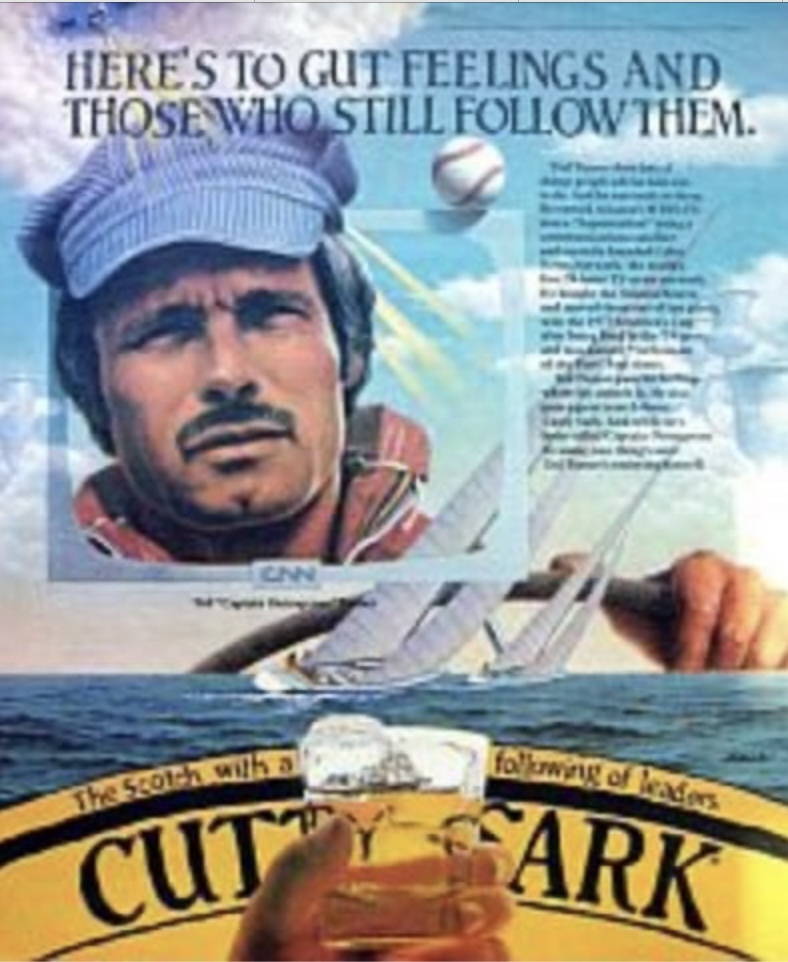
IN THAT PIC: Tuner in an old Cutty Sark scotch ad.

Fun facts:

Turner was the 2nd to last American to successfully defend the Cup after we won the inaugural event in 1858. (Dennis Connor won in 1980, and lost it in 1983, then won it back and defended it another time. “Mr. America’s Cup.”)

Turner’s boat, Courageous, was the first built of aluminum. The naval architect? Sparkman & Stephens. Turner actually bought this boat off the 1974 campaign rather than commission his own boat.

It was also one of five or so consecutive America’s cup defenders built at Minneford Yacht Yard on City Island, former home to New York Sailing Center! S&S had an office on the Island for a time; it eventually became a hybrid of cafe and diner owned and run by a lifelong friend of this author before she sold and moved on to first running and then buying/operating another eatery on the Island. There aren’t many good places to eat on City Island, despite the rep, but The Black Whale is one!

America first lost the America’s Cup the first time the defending yacht was NOT built on City Island. Waa waa.

How great and important is the America’s Cup, really?

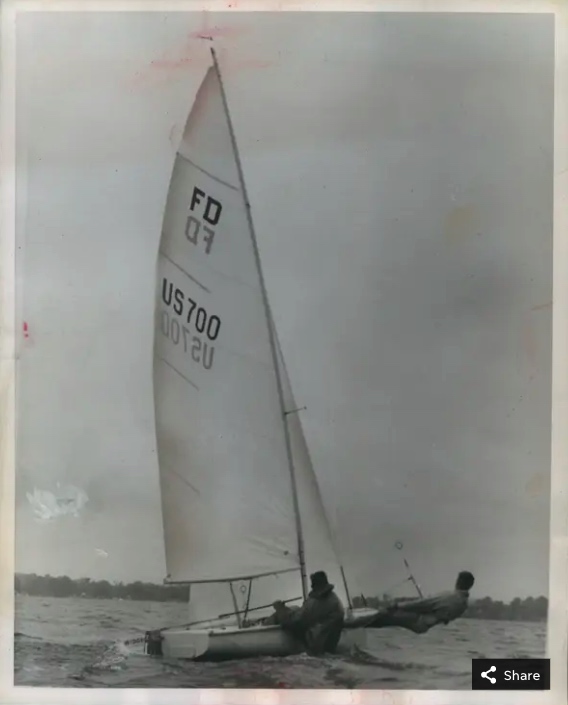
As Turner himself said (not in these exact words), the Flying Dutchman world championship was arguably a more competitive and noteworthy accomplishment than winning the America’s Cup. The FD was also raced at the top level by folks like Buddy Melges and Paul Elvstrom – arguably the two most successful sailboat racers in history. And, Turner won the worlds once. The FD is a beast of a dinghy; it’s so large it’s hard to think of it as a dinghy. It’s 20’ long; sail plan is main, genoa (not jib), and spinnaker; crew on a trapeze. The class was in the Olympics for a very long time. (Turner competed in the US Olympic trials in the FD but didn’t get a berth.)

IN THAT PIC: not, that’s not Tuner. But, it’s a great shot of a Flying Dutchman in action and gives a sense of how hard this boat might be to sail. Can’t find a pic of Ted other than big-boat shots so this has to do for now. Photo: Flying Dutchman Class Association.

He was also world champion in the 5.5 meter (another old and very competitive class of keelboat). He won several US national championships in the Y-Flyer class, which is less well known than any of the other classes listed above, but due to its sailing qualities and ongoing popularity, was selected for the US Sailing Championship of Champions invitational regatta in both 2018 and 2024. It’s a double handed dinghy that’s more like a scow than anything else (super flat with a wide bow).

Our local sailmaker from City Island, Mark Ploch, competed in this as crew in 2018 for his daughter who was on a hot streak in college racing at the time and earned a wild card spot! Ploch (rhymes with “low”) won the j/24 North Americans once when that meant something, and sailed all manor of boats including the world’s toughest – the Finn dinghy. So, all high-pedigree/good company.
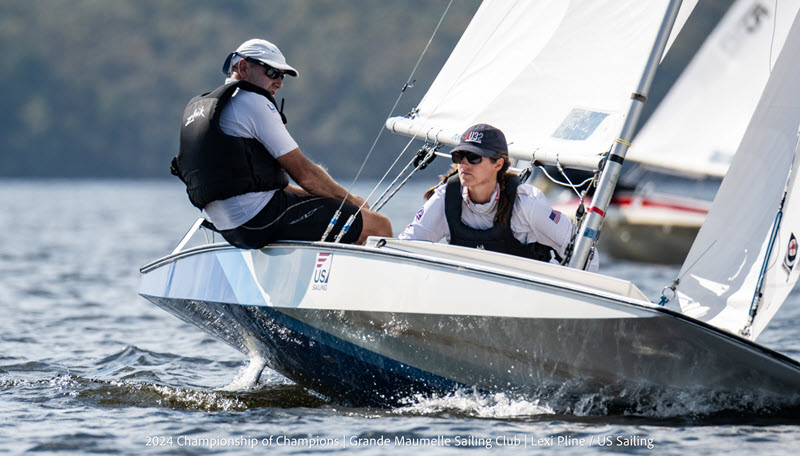
IN THAT PIC: 2024 Championship of Champions… for the 2nd time in less than a decade, in the Y Flyer class! That says something about the boat’s qualities. No, can’t find a pic of Turner in one but he won the nationals several times. Photo: US Sailing.

What’s the expression?

8 bells for Ted Turner, whose many legacies live on as a education and/or inspiration for all.
RIP, Buddy

Harry “Buddy” Melges, one of the greatest sailing racers ever, has passed at 93 after passing down a legacy that has reached down even to those learning how to sail.

I got into sailboat racing when Buddy Melges was a household name in racing circles. From Zenda, Wisconsin, Melges (pronounced with a hard “g”) was super successful in a variety of boat types and also influential – and consequential – in sailboat design.

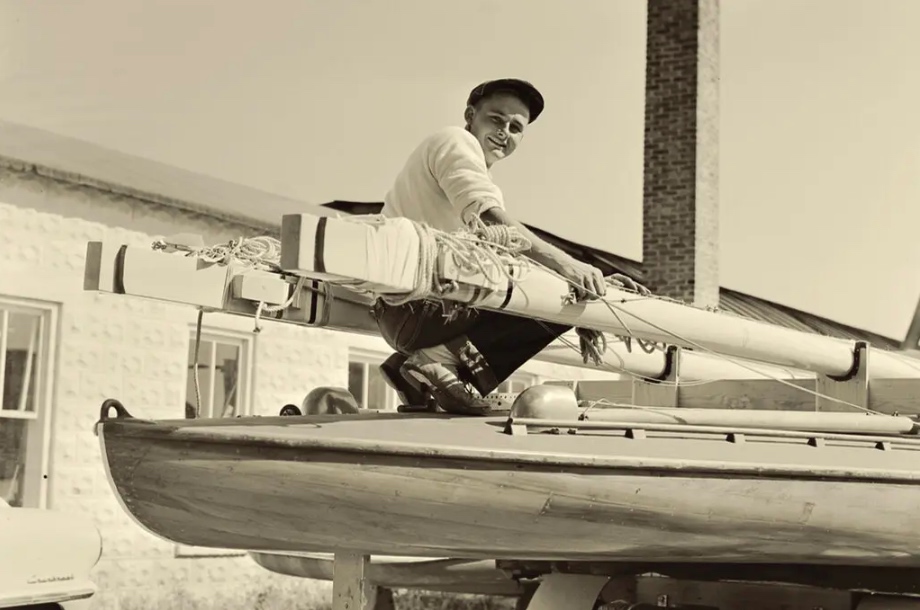
IN THAT PIC: Melges in ’53 after returning from combat in Korea with a Bronze Star. Of course, he went on to win the coveted Star World Championships twice. Once is impressive enough.

I’ll leave the more general obituary to others (several are linked to at the end of the post, along with a photo biopic from a local paper). Here, I’ll talk about him from a racing perspective.

He was a scow sailor. What does that mean? Scows are type of very flat, wide, lake boat. Scow racing is very competitive in many lake areas of the US. Melges came up, so to speak, on scows, and was one of the most successful scow racers in history. He was particularly successful in the E scow, winning the nationals 5 times. I’ve never sailed one, but reading about Melges back in the day made me curious to try.

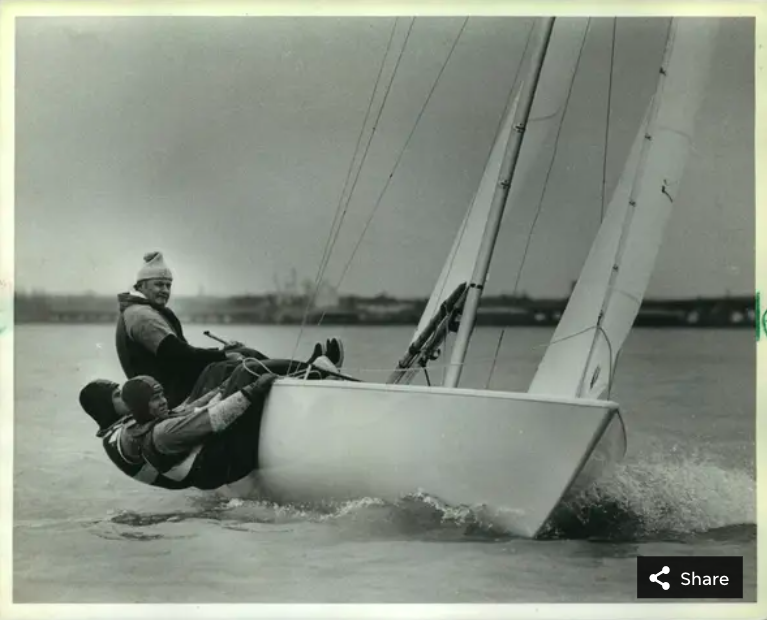
He also raced both dinghies and keelboats. He medaled in two Olympiads: the Flying Dutchman in 1964, and the Soling in 1972. The FD was the “heavyweight” 2-man sloop rigged dinghy with main, genoa and spinnaker, and it was a beast to sail. Paul Elvström and Ted Turner were two competitive FD sailors, to give some perspective on the talent in that class. (Neither won an Olympic medal in one.)

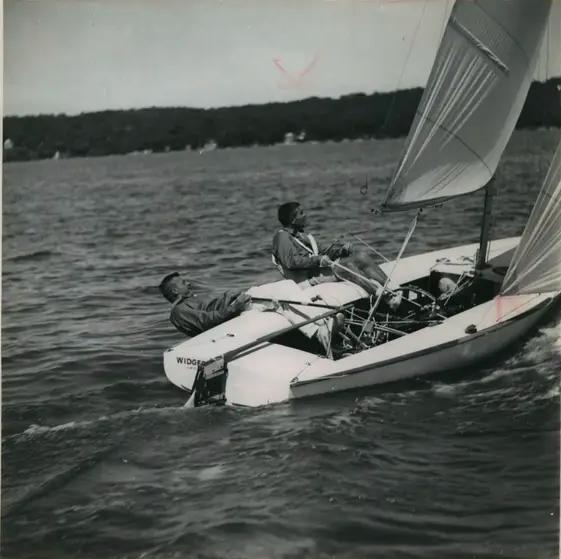
IN THAT PIC: Melges helming, and hiking, with his venerable crewman Bill Bentsen. This is a Flying Dutchman, the largest Olympic dinghy and perhaps the largest one period. While no longer in the Olympics, it’s still a popular class. These guys won Bronze in the 1968 Olympiad.

The Soling? The 3-man Olympic keelboat, also sloop rigged, with main, jib and spinnaker. I have a lot of time on Solings, although much of it was learning to sail and race when younger and, later, teaching both sailing and racing. I did sail in an East Coast Championship once as crew. Who did Melges beat in the 1972 Olympiad, amongst others? Paul Elvström, arguably the greatest racing sailor in history. (The Great Dane didn’t do very well in ’72, coming in 13th.)

But wait – there’s more! Melges also championed in the Star class, another sloop rigged Olympic keelboat (2 person; main and jib; no spinnaker). He won the World’s twice in that class. Who else is a sailing household name with fame in the Star? Dennis Connor of America’s Cup lore.

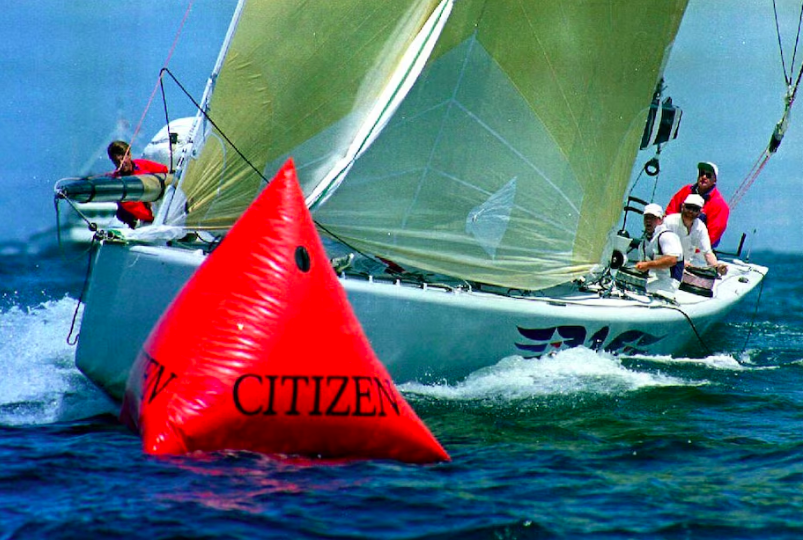
IN THAT PIC: The 1992 Americas Cup. Melges co-skippered with Dave Dellenbaugh and syndicate chief Bill Koch. That’s almost certainly Melges at the helm in the red jacket and white cap.

And, then, there’s the America’s Cup. Melges won that in 1992! Co-skippering, to be clear, with Bill Koch and David Dellenbaugh, but an integral part of the team. And, to win the right to defend the Cup, they had to defeat Dennis Connor, the name most synonymous with the America’s Cup. Melges was in his 60’s at the time, when the average age of an AmCup skipper was more like 38. Decades later, he said this:

“It’s nice to win the America’s Cup, but I’ll take an Olympic medal.”

Harry “Buddy” Melges, c0mparing winning Olympic Bronze and Gold to winning the America’s Cup. He did all three, and was more impressed with his Olympic successes.

Taking a few steps back in time from the America’s Cup, I realize I overlooked some of his successes. He won the Skeeter Ice Boat World Championships 7 times, and the 5.5 Metre keelboat class World’s 3 times. Almost more impressively is the fact that these two records, plus the E-Scow record, were all done from the ’50’s through the ’80s. Yup. Consistency over a long span of his life.

IN THAT PIC: Melges sailing a Soling with his sons hiking out as crew! I have fond memories of sailing Solings with my dad. Neither of us were in the same universe, much less league, as Melges, but we played the same way.

That record makes Melges one of the most well-rounded and diversely successful sailboat racers in history. At the moment, only Elvström comes to mind as a comparably, or arguably even more, successful overall sailboat racer. (Melges has the ice-boating, giving him a singlehanded class, and the America’s Cup. Elvstrom has the Finn dinghy, the world’s toughest boat to sail, with 4 Olympic golds, and he just missed the bronze in the Tornado catamaran when he was in his 50’s and his teenage daughter was crewing for him. As with Melges, Elvström was a 5.5 Metre champion. Elvström was top tier in the 505 dingy and Dragon keelboat as well. Melges built boats; Elvström built sails. Both businesses continue to thrive.)

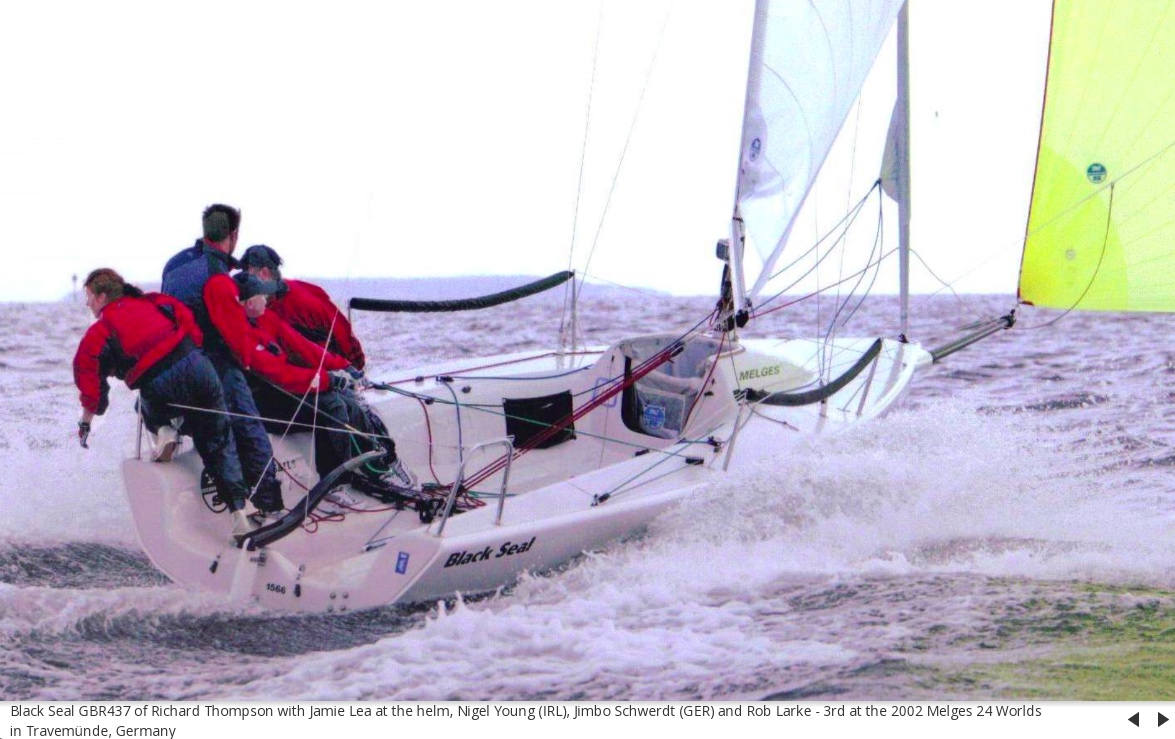
Melges had always been into making and tweaking boats. Ultimately, he followed in his father’s footsteps with Melges Boat Works, transitioning and expanding it. After the ’92 Americas Cup, he partnered with renowned naval architects Reichel/Pugh and the Melges 24 was born, with a 32 to follow. The 24 was a true sport boat, super-light and fast AF with an asymmetrical spinnaker to make for more tactical and controlled speeding downwind. It became a very competitive class around the world, supplanting the J/24 (which was succeeded by both the J/80 and J/70).

IN THAT PIC: a Melges 24 racing flat out with main and asymmetrical spinnaker. This sport boat made the older J/24 show its age and ushered in more designs that were better racing platforms.

Melges was nicknamed the Wizard of Zenda, and he co-authored, with Charles Mason, a well-received book on racing called Sailing Smart: Winning Techniques, Tactics and Strategies. If memory serves from the debates from back in the day, Melges believed in something called the “lee bow effect.” Other experts didn’t. I happen to believe that most people misunderstand current, which is what’s involved here, and I always believed Dave Perry’s explanation of why there is no such effect (which he credits Peter Isler explaining patiently to him for over a year until he “got it.”).

The lee bow effect argues that, if the current is basically head-on to a boat sailing upwind, meaning it’s also sailing directly into the current, that the boat could pinch slightly (head up toward the wind) to get the current onto its leeward, or downwind, side. That, in turn would push the boat further to windward, more than offsetting the loss by going a little too close to the wind.

IN THAT PIC: Melges hiking harder than his crew – unusual to see. Reminds me of… Elvström! (He liked to steer from the trapeze sometimes.) This is a Flying Dutchman.

Never made sense to me. Set a fleet of boats adrift with no wind, but in current. Have them at various angles. They all drift the same way. Start moving them through the water with motors. They all travel exactly straight through the water. What’s different? There’s a ‘wind’ created by the boats moving through Earth’s atmosphere, regardless of current. The current simply changes that angle. But, rotating the boat in the water doesn’t make the boat ‘feel’ the current and react differently, so there’s no advantage to changing the angle of the boat to the path of the current. Boats neither ‘feel’ it nor are ‘deflected’ by it.

Having said all that, my racing success is limited to the local and regional level and nothing to speak of compared to that of Melges (nor to Dave Perry, Laser and Soling champion amongst other accomplishments, or Peter Isler, tactician to America’s Cup winner Gary Jobson).

Maybe Melges wrote about it in his book. I just ordered a used hard-cover copy to find out.

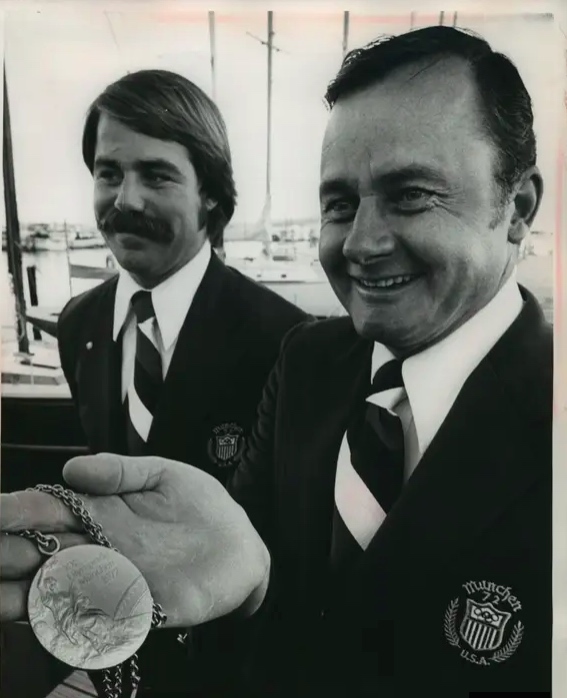
IN THAT PIC: Melges and Bentson after winning gold in the Soling class, 1972 – the racing result he always remained the most proud of.

Rest in peace, Buddy. The sailing world misses you already.

Links to some bios and obits:

https://www.washingtonpost.com/obituaries/2023/05/24/buddy-melges-sailing-dies/

https://www.jsonline.com/picture-gallery/news/local/2023/05/19/buddy-melges-photos-flying-dutchman-scow-soling-americas-cup/11907904002/