Turn Initiation: it’s not just for Skis and Snowboards anymore…

As we’re deep in the throes of a cold start to the winter – polar vortex/arctic blast kind of cold – thoughts are somewhat removed from sailing.  But not entirely.

While on the slopes enjoying fresh pow over the holidays, and warming back up to techniques shelved during the boating season, I was reminded of the concept of turn initiation.  Don’t ski or ride?  Don’t even sail yet?   No problem – we’ll break it all down and maybe even get you stoked in the process.
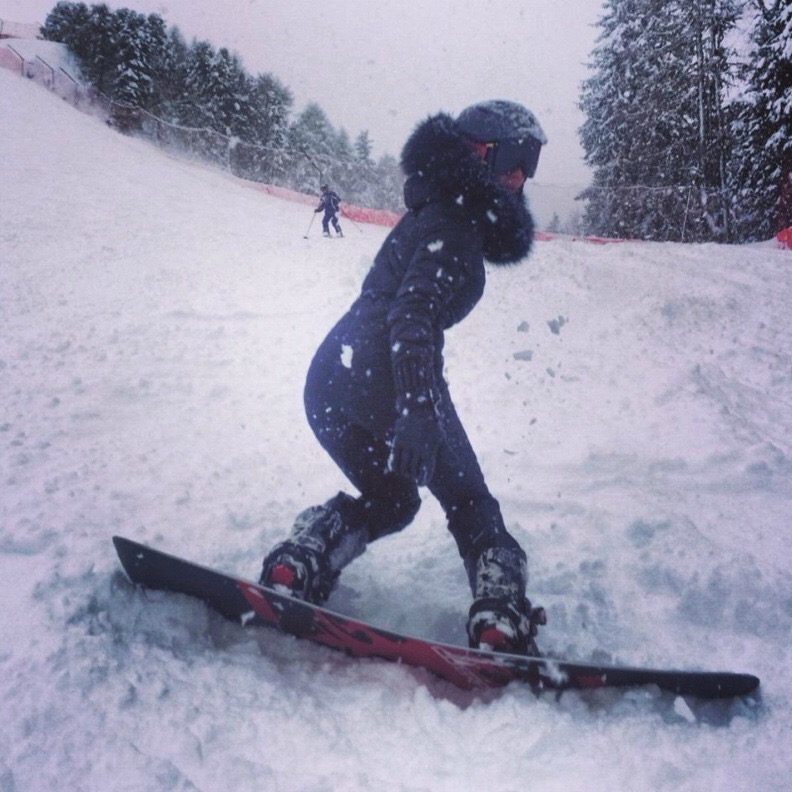
Looks like this rider either tried an abrupt start or ending her last turn that way. Wasn’t there; can’t be sure. But it looks like she made a zig-zag of quick pivot turns in a that are on the right in pic. Her edge and bottom of board are a brake right now. Good if she wanted to stop quickly. How does that translate to the rudder of a sailboat? Read on…

“Turn initiation” is the technique used to get a ski or snowboard to go from flat on the snow to beginning a turn to one side.  Anyone who can link turns on either kind of plank knows what I’m talking about.  It’s like this: we make certain motions to suggest to the equipment that we want to turn instead of going straight.  After it starts listening, we add more motion to shape and complete the turn to the extent we want.  Regardless of what kind of turn we make, we have to start it – and eventually end it.

Same with boats!  Techniques, and consequences for ignoring them, are different.  Thankfully for sailing, there are usual no real consequences.

If you ski or ride, but are beginner to intermediate, it’s time to think about this again as you begin your snow sliding season.   You experts out there don’t think much about it, but warm up your technique and self-critique as you get your form back each season.
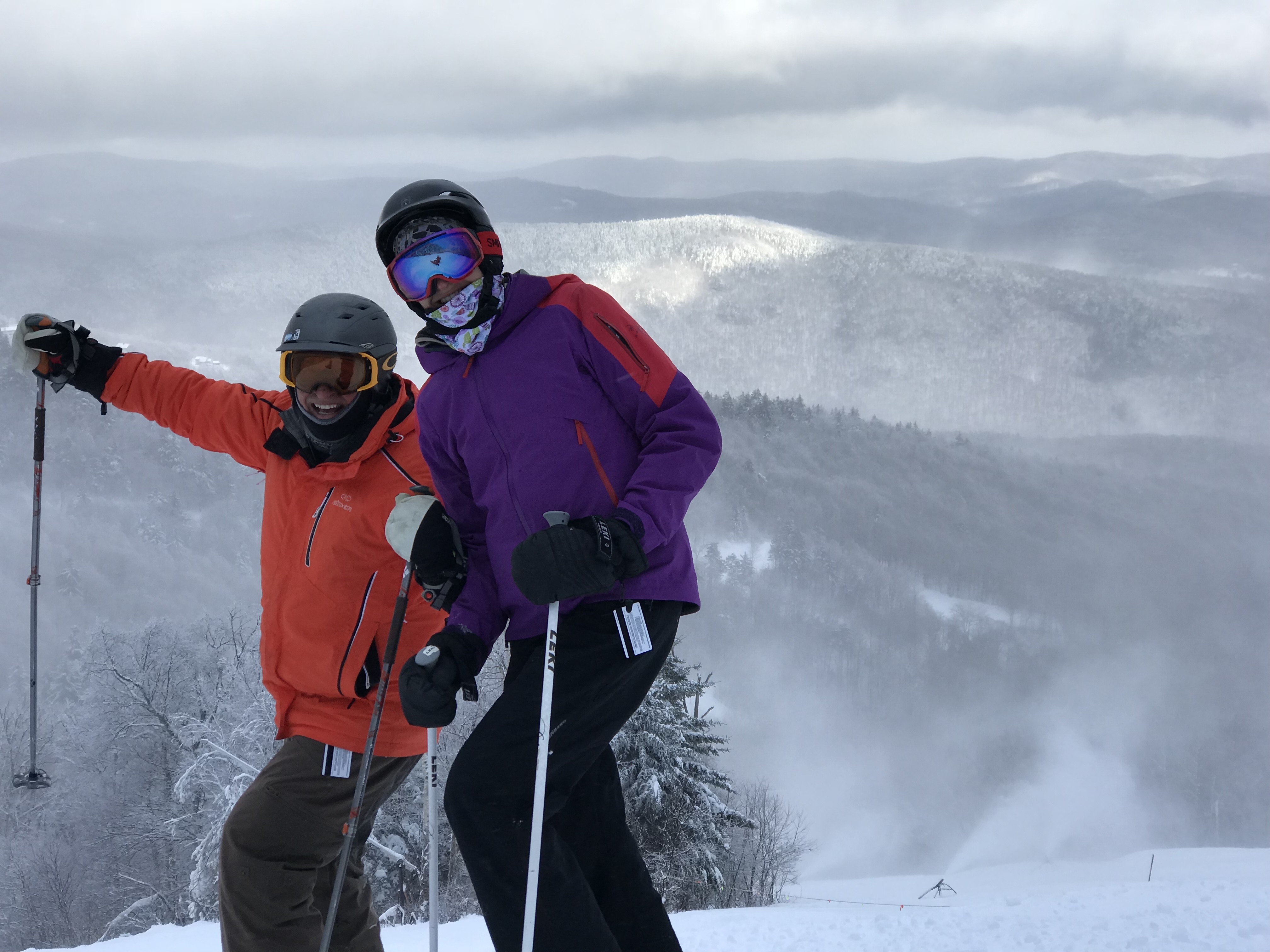
These guys are about to go down a moderately steep trail at Killington in Vermont. Skiers have two planks. Duh. Translation to sailing? Twin rudders that can operate independently. Kewl!

Back to sailing and turning a boat.  Let’s leave special techniques like steering with sails, and with body weight, out of it and focus on the thing we all use all of the time: the rudder.  (Don’t even sail yet?  That’s the fin that we turn back in forth behind the boat to make the boat turn, like a paddle stuck in the water and angled to one side.  Makes the boat turn.)

At the most basic level, we angle the rudder to one side or the other when we want to turn a boat.  Some boats have a stick attached called a tiller, found on smaller boats and almost mandatory to learn with.  Once the boat is in the upper 20-foot range, and especially at around 30 feet, it tends to have a wheel instead.  As the rudder is angled more to one side, the pressure of the water hitting it pushes it back the other way, taking that end of the boat with it.  The boat pivots in the middle, and turns.  (The direction the fin aims is also where it want to go once it gets moving.)

So, to make a slight or narrow turn, the rudder does not need to angle much to the side.  To make a sharp or tight turn, the rudder needs to move pretty far over.   Turn initiation is really the rate of motion to get it started, so that the whole process works better.

On a board or skis, if we suddenly wrench the plank over to the side, we often catch an edge in the snow and catapult or slam.  No fun.  But if we get the edge to gently start engaging, and then add more edge and pressure, we can smoothly get the plank on its edge and into a turn.  Can’t usually skip steps: have to START the turn before shaping and completing it, before ending it.

I haven’t skied since I as a boy, but I’ve watched a lot of skiers.  Good skiers are graceful in their transitions.  I’m a pretty solid boarder – somewhere in the advanced range by objective standards I’ve come across. I’ve watched a lot of boarders too.  I won’t pretend I know how to turn skis.  But Im supposed to be expert at understanding how to turn a board, as I’m a certified instructor.  So, I’ll talk about boards.

“I PISS on snowboards and boarders!” That you?  That’s fine. We’ll just shred around you and share the slopes with others.

For most turns on a snowboard – and some experts say all – we initiate by twisting the front of the board slightly so one edge is pressing into the snow and the other starting to lift.  Think of holding the ends of an ice cream stick with your thumbs and forefingers.  Now, think of holding one end level, but rotating or twisting the other end slightly.  That’s the general idea.  In the air, this does nothing but flex the stick.  But on snow, one edge of that stick presses into the snow, and starts to take the rest with it to that side.

Of course, we add some at the other end, and make more of a turn.  And, release.  And, rinse and repeat, maybe mixing it up from time to time to not get bored.

How do we translate this to turning a sailboat?

Think of the rudder as the edge.  initiation is turning the rudder ever so slightly to suggest to the boat that it should stop going straight, and to pivot.  Once it listens, we gradually increase the rate of turn but angling the rudder more.  But at what rate?  And how far?

This is the beautiful part, elegant in its simplicity.

We slowly, steadily, move the tiller to the side.  One simple, steady motion.  Easy.  How far?  Until we like how much the boat is turning.  For how long?  Until we’re half way through the turn, at which point we reverse the motion at exactly the same rate.

What if we need the turn to happen quickly?  Well, there is no shortcut here unless we’re throwing the boat around with our body weight, and/or using sails to help turn the boat.  Again, let’s leave it at rudder only for this discussion.  (And even when we’re using other techniques, rudder action doesn’t change.)

Too many sailors just jam the rudder over hard when they want to make a quick and/or large turn, especially for tacking (crossing through the wind quickly and ‘catching’ it again on the other side).  Jamming it over skips the initiation.  Consequences?

Drag.  The rudder is now sideways to the water, creating lots braking resistance.  Imagine gliding along in a canoe or kayak, and suddenly jamming the paddle in the water off the back end, with the flat side perpendicular to the direction of travel.  Sea brakes!  Craft slows down.  Think of air brakes on a plane.  Overuse them at the wrong time, and the plane starts to drop.

Stalling.  Because it’s angled too aggressively to the flow of water, the water doesn’t flow around the far side of the rudder, and and bottlenecks against the near side.   Water flow around the rudder allows the rudder to take the back end of the boat with it in an arcing turn, and therefore makes the front go the other way, pivoting around the middle.  Stall the flow, and we stall the turn.  (This also increases “leeway,” both when turning and when trying to go straight, for those with more sailing savvy.  It’s why excessive rudder angle has to be dealt with one way or another when going straight.)
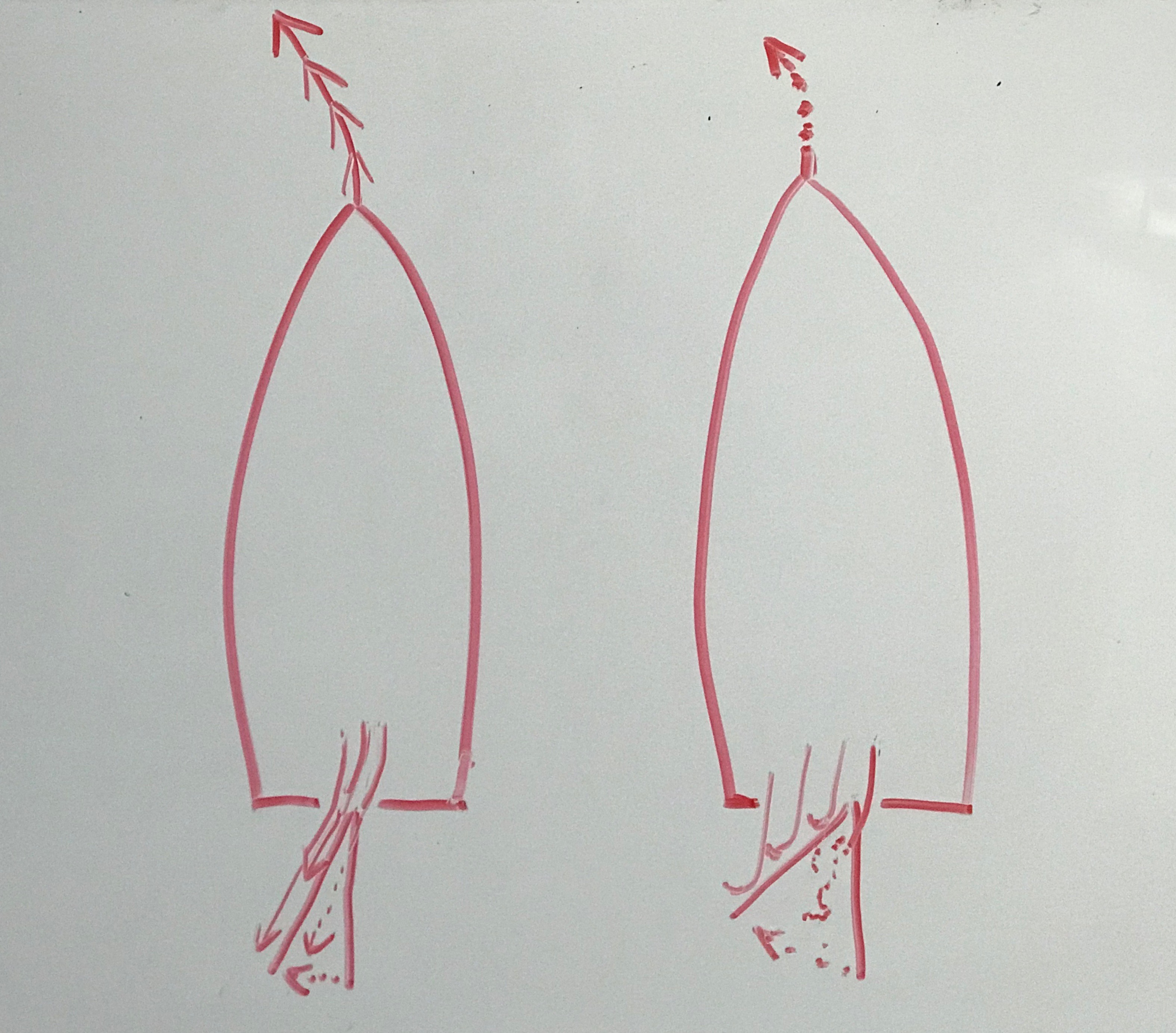
Sorry, only one color still had ink… On your left: outline of a sailboat and its rudder, shown twice – straight, and also cocked slightly to port (left). The curved lines and arrows show how the water would flow over it on both sides and allow good turn initiation. On your right: severe rudder angle typical of many sailors when they make a large turn, especially to tack (cross through the wind quickly). Arrows and squiggly lines show turbulence with little to no water flow.  This is what happens if you simply jam the tiller over.  What a drag…

It’s slightly counter-intuitive at first.  “I want to turn hard, so why not just turn the tiller/wheel hard?”  Doesn’t work that way.  You’ll get there sooner by starting slower.  A slow, steady, linear motion of the tiller (or wheel) gives you everything you need:

  1. Turn initiaiton.  Suggests to the boat what you want to do, and it gently begins.
  2. Shaping.  We turn the rudder enough to get the turn shape/speed we want.
  3. Completion.  So simple – half way through the arc of the turn, we just reverse what we did with the rudder at the same steady rate!

The tiller moves in a linear fashion, but the boat turns in a crescendo/decrescendo.  See?  We’re teaching to both logical learners and musical/rhythmic ones!   If we graph it out, we’ll see different patterns for the tiller and the boat…
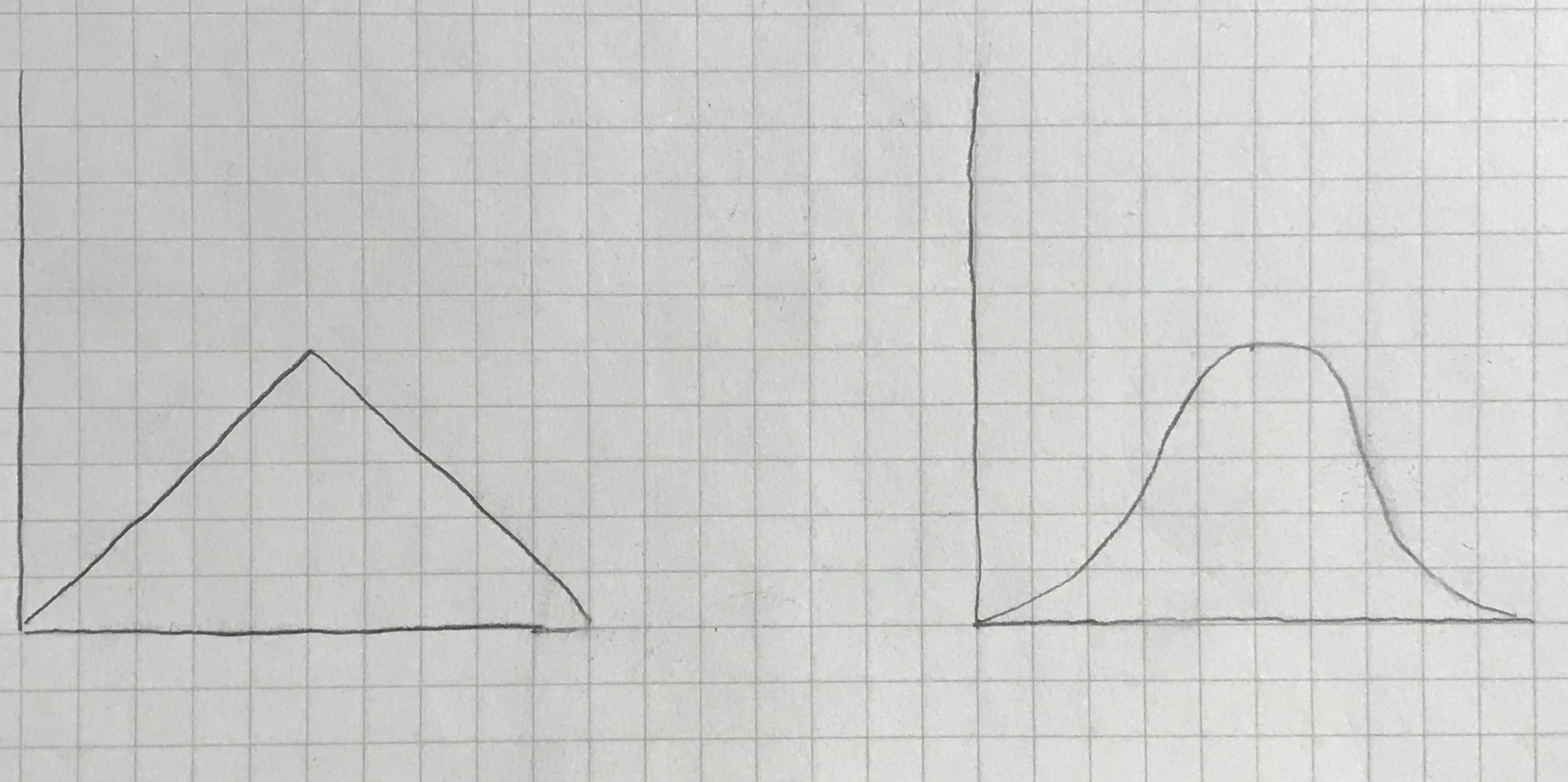
On your left: graph of what the tiller motion is like – linear in speed.  On your right: the effect this has on both rudder angle and boat’s turn shape: good turn initiation, shaping, and completion. WooHOOO!

The more rudder angle, the greater the turn.  To get there, we simply move the tiller steadily to gradually increase rudder angle, and therefore the rate of turn.  Your boat will take over, and the rudder will follow.  When you feel that, you’ll know you got it right.

Then, you’ll be ready to shred!

Want to learn more about turning a sailboat?  See us at NY Sailing Center in the spring.  We start in April.

Want to learn how to snowboard?  Already ride, but want to improve or take it to the next level?  Our Director, Dockmaster and rambling Editor at Large, Captain Card, is a certified snowboard instructor who loves to teach.  Hit him up to discuss getting out on snow.  This can be as close as Mountain Creek, NJ (an hour from the GWB), as far as South/Central Vermont, or mid way at Hunter or Windham in the Castkills.

Kids Trip, BVI: it’s a Wrap

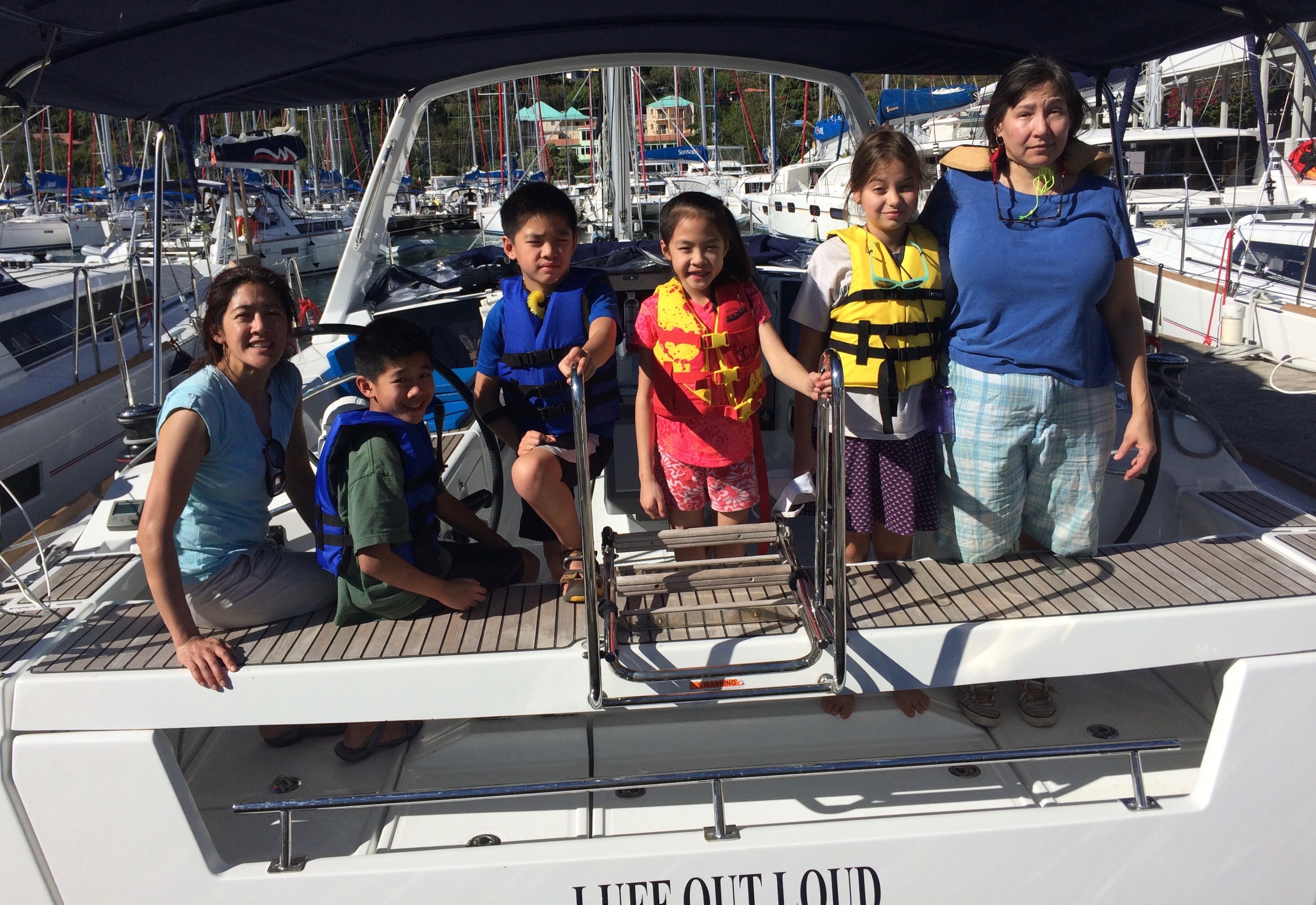
Our inaugural Kid/Parent trip is in the books, and it was a resounding success. We’d been planning to do this for awhile.  It’s always nice when a trip exceeds your expectations, and that’s what happened. Now, we’re thinking of an annual Kid/Parent flotilla during the Presidents’ Week.

Meet the First Families… (Note: click any pic for full size/res – can click twice on lap/desktops)

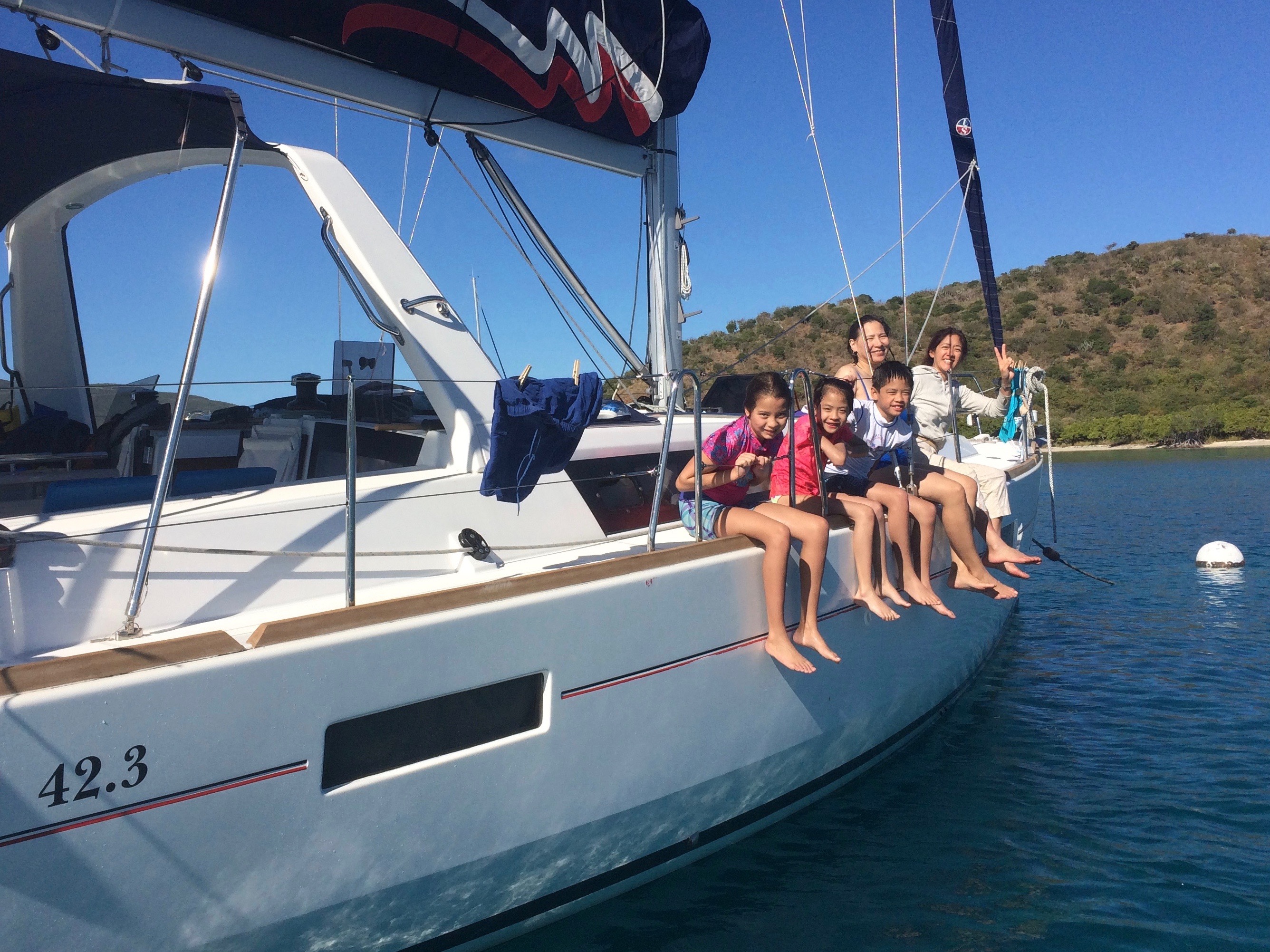
The afternoon sun had us all squinting but it’s all good. Just about to depart!

Both Moms were graduates of our adult learn-to-sail program and continued sailing with us.  One had already gone on to get her own 27 footer locally in the northeast.  All the kids had some exposure to sailing, and were mostly the same age, so it was a good fit.  We scheduled a slightly shorter week than normal for logistical reasons and at the end of it, we were hearing,.. ” I don’t want to leave.”  That’s a good trip.

While it was mostly oriented at the kids, in this case aged 10-12, the difference between a kids’ itinerary and one for adults is mostly details. The allure of the watery and warm environment, swimming and snorkeling, and some hiking and sight seeing works for all.

Grins are good. Running along the north shore of Tortola en route to Jost Van Dyke.

We managed to get in a fairly typical itinerary of islands and anchorages, even including Anegada as the winds were relatively calm. Jumping in from the swim platform seemed to rank highest in customer satisfaction.  Snorkeling and running around like banshees on the beach placed and showed respectably.  One medium hike and one that was arguably a little too long went over surprisingly well.

Marine sightings included one dolphin, several large sea turtles, more large tarpon than usual, a spotted eagle ray that came flying out of the water like a bat out of hell chasing bait fish, a fairly curious ‘cuda (just for the Captain who was off on a snorkeling flyer), and numerous colorful and oddly shaped reef fish found by several of the kids and adults

Winds were light this time, and we didn’t have to reef once.  We saw others with reduced sail plans on occasion but we didn’t see the need, even with kids.  The boat just didn’t heel much.  When it was ‘sailing for the sake of sailing,’ the kids were fond of pointing out when the boat speed dipped below a few knots, and when it made more sense, we occasionally motor sailed to keep it moving.


Day One: mid-afternoon departure, after receiving the boat at noon, so lucky to get to an anchorage at all and happy to punch it under power.   Went to Marina Cay, a good jumping off point for other anchorages. Great shake-down snorkel for all, all of whom were brand new to it with one exception.

Captain Casual, trying to not be Captain Obvious (as in not over coaching, as she got it right away). First leg of trip, less than half an hour out.

Day Two: off to Anegada.  Forecast seemed to favor it, and once we poked our nose out past the main islands, it was confirmed in real time. This was one of the best sails of the trip, never needing to motor to keep up a good cruising speed.  All who wanted to steer got plenty of time. Some ocean swells, but nothing we couldn’t handle from a comfort standpoint.

Made lunch and then took an open-air taxi ride to Loblolly Bay and Beach on the north shore, one of several great spots.  Across the inland pond we were able to see part of the resident pink flamingo colony of the island.  Far away, but they were there.  Snorkeling, scrubbing energy on the beach, tightrope and hammock games, and a little ice cream didn’t hurt.

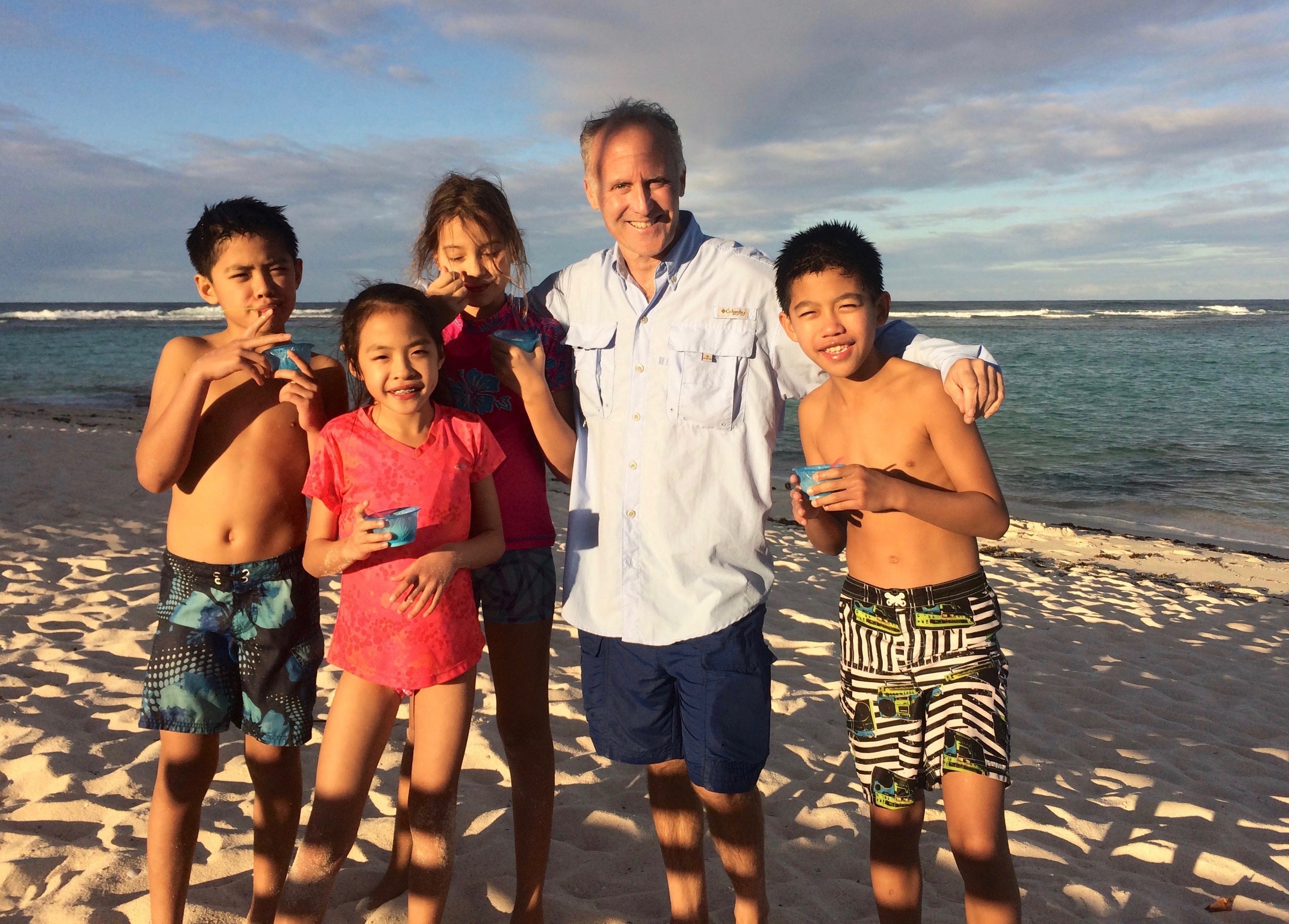
Apres snorkel ice cream. Loblolly Beach, Anegada.

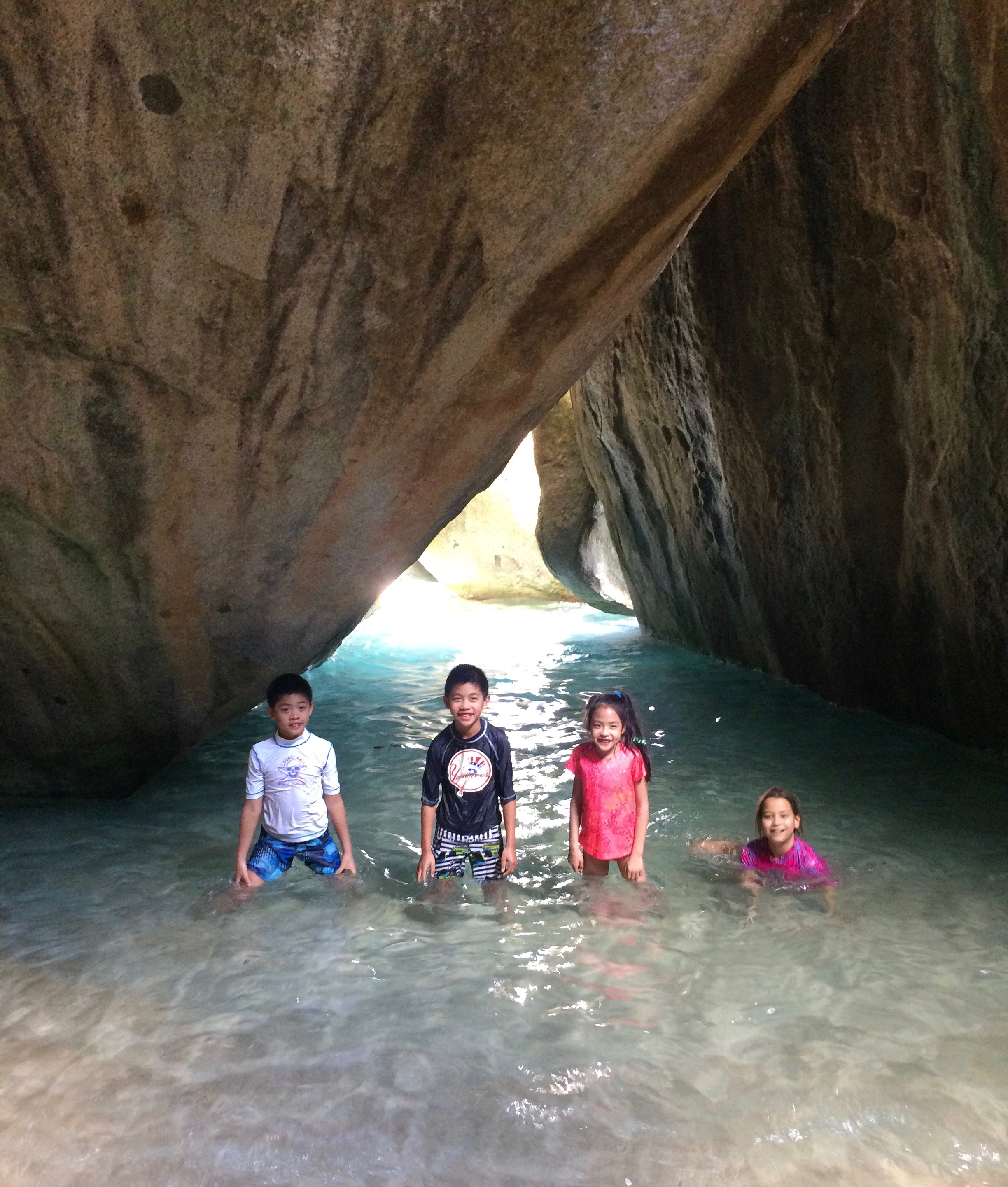
Day Three: Virgin Gorda.  not enough wind to justify trying to sail back so we motored and made the time pass with games and snacks. Moored up at Saba Rock, then the kids did what they do best: jump off the boat for awhile.  The Captain organized a day trip for the group to The Baths, the famous boulder formations at the other end of Virgin Gorda.  They had a blast while the Captain caught up on correspondence, scoped out a new snorkeling spot, and shot some pool with pepperoni pizza for sustenance.

Not a typical scene anywhere – except at The Baths on Virgin Gorda. This is just one of many spectacular pools amongst the boulders.

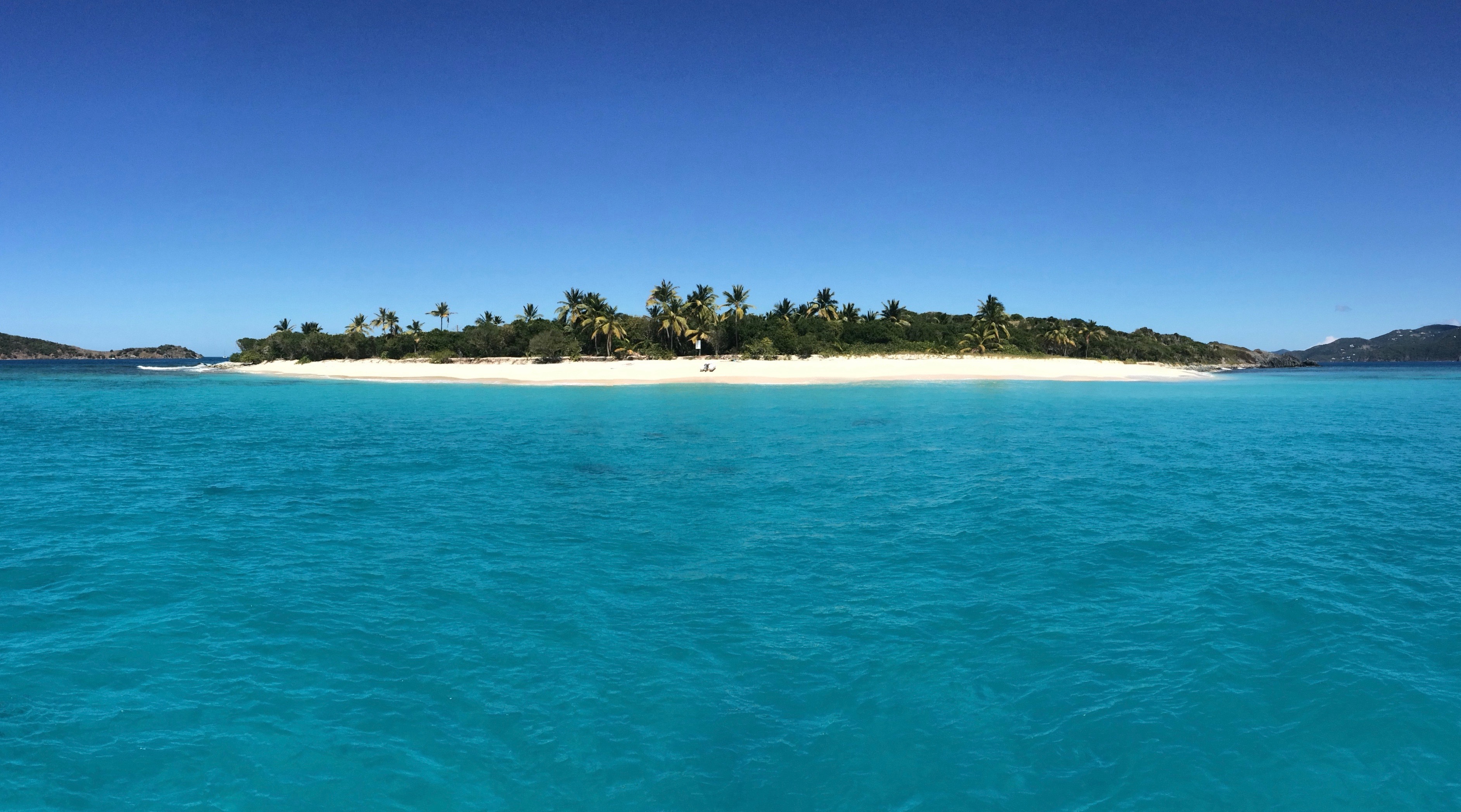
Day Four: on to Jost Van Dyke.  Combo of sailing and motoring to get the miles under the keel, but it was a fun ride.  Gentle ocean swells at times and otherwise flat.  First, we moored off Sandy Cay and did a dinghy drop of passengers to play and explore the small island, which was donated by Rockefeller in 2008.  It’s a delightful swim over a sandy bottom to get ashore, then one can take a short scenic hike to the top and back down the other side for great vistas and getting the wiggles out.  Huge hermit crabs are scattered around the trail here.

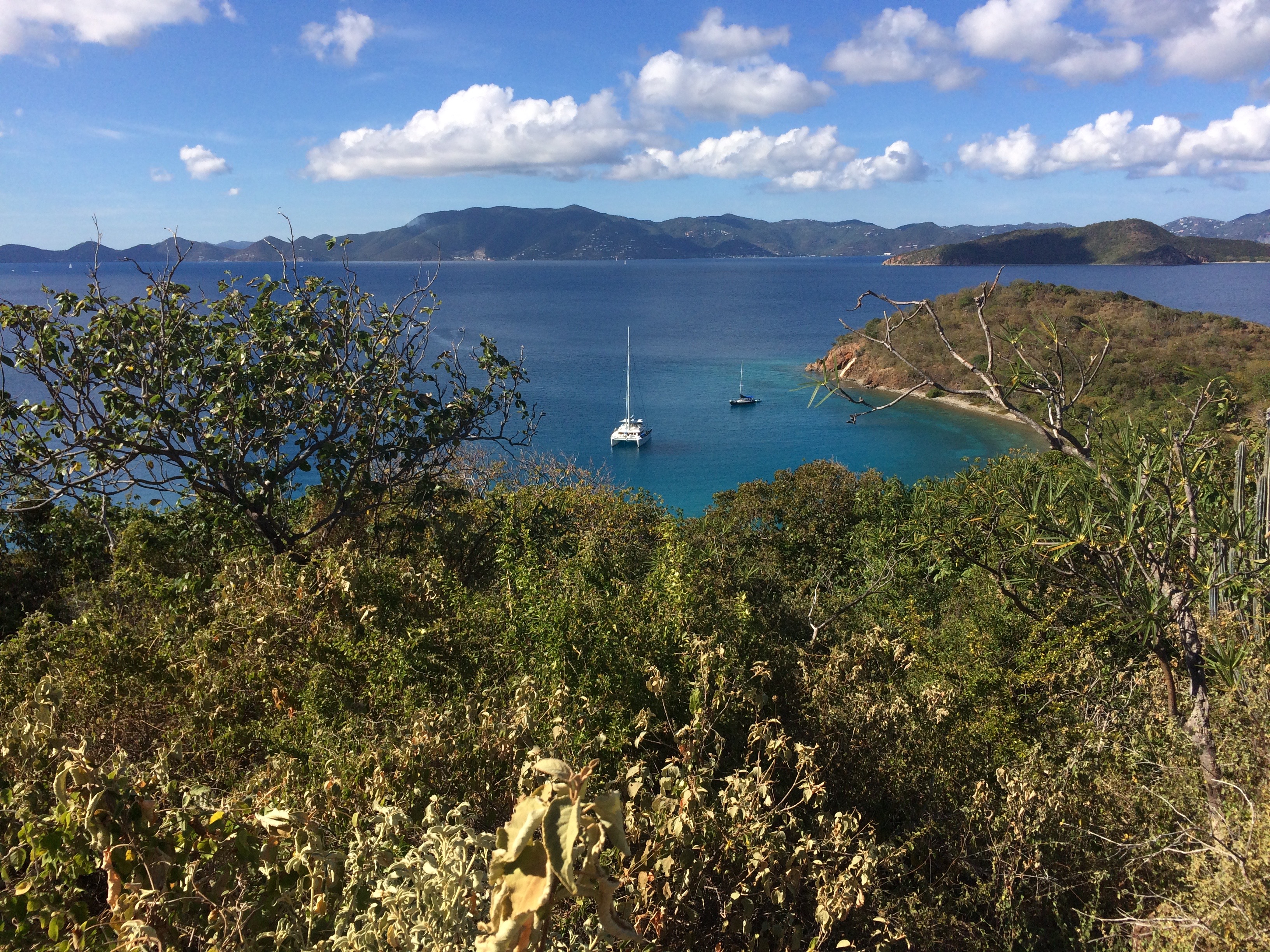
Much taller than it looks, little Sandy Cay is a great day stop. Swim in from your moored or well anchored yacht; hike up the trail to the top and back around the other side.

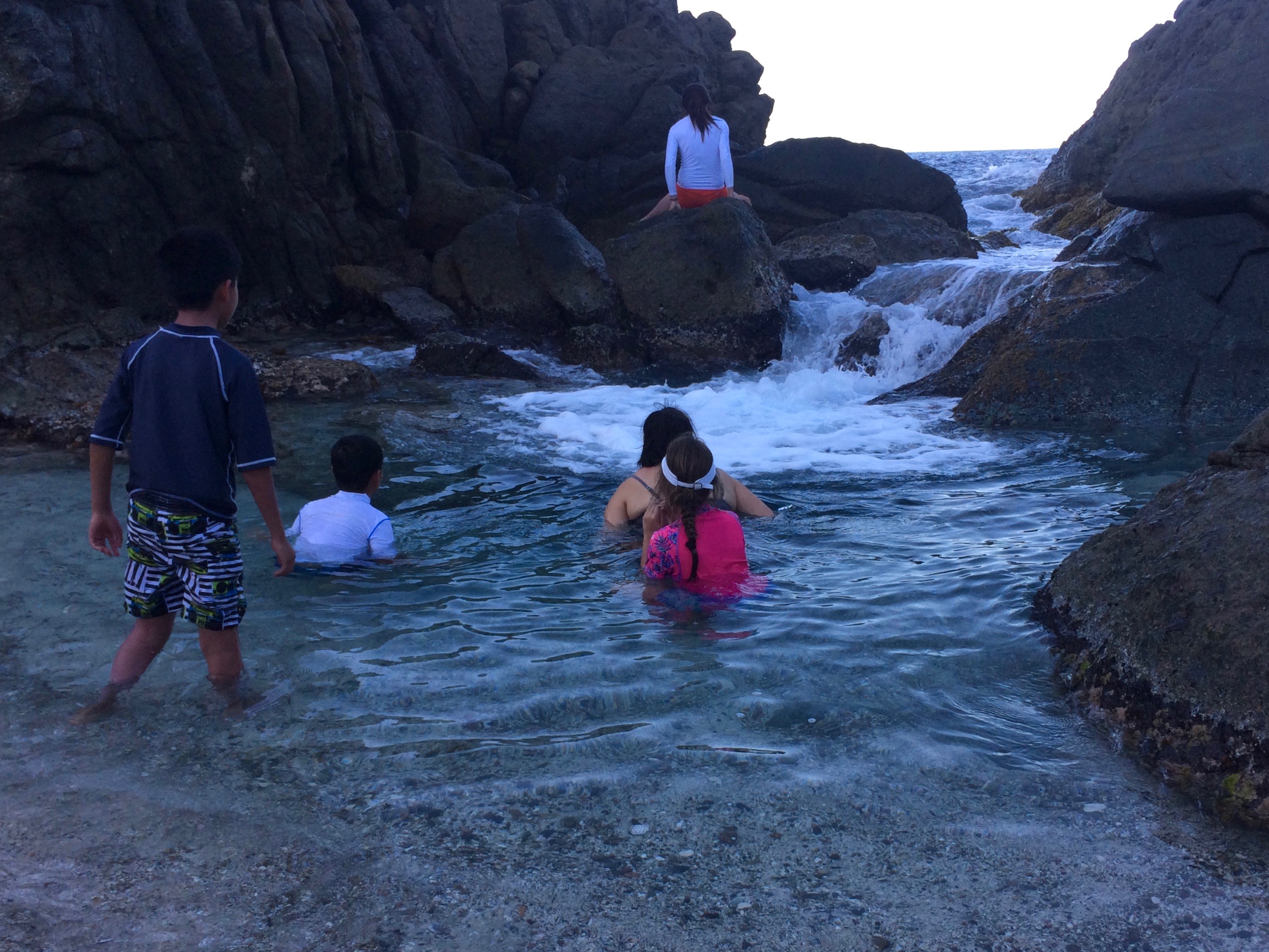
We anchored off Little Jost Van Dyke for the evening, affording more diving maneuvers (mostly cannonballs) off the swim platform before we did a group trip to he Bubbly Pool, a moderate walk from the dinghy dock.  This is a small beach almost completely enclosed with lava formations and rocks, through which the open Caribbean surf rolls in from time to time making a foamy whirlpool of things.  Very fun and relaxing; well worth the walk.

The Bubbly Pool, Jost Van Dyke. Waves break through the rocks and tumble in, creating a foamy, refreshing bubble bath.

Day Five: more snorkeling and swimming before weighing anchor and setting sail for Norman Island, our last anchorage of the trip.  We sailed most of the way, furling up before negotiating Thatch Cut at the west end of Tortola, and then enjoying our first real beat of the trip with several tacks thrown in as we zig-zagged along St. John.

After mooring in the Bight at Norman, we dinghied in for the long hike to Money Bay towards the other end of Norman.  One kid/parent turned back after making a good show of it and played at the main beach, including a kayak rental.  The rest of us trudged on and made it to Money Bay for a secluded snorkeling expedition followed by lunch and a more downhill return.  Followed, of course, by ice cream and virgin daiquiris…

One of the scenic overlooks on the Norman Island hike.

Next up: snorkeling at the Caves off the headland of the Bight.  Excellent visibility this time; not many schools of fish but plenty of large parrot fish, a few trumpets, and other individual and paired sightings.  Followed, of course, but scores of jumps off the back of the boat once we returned.

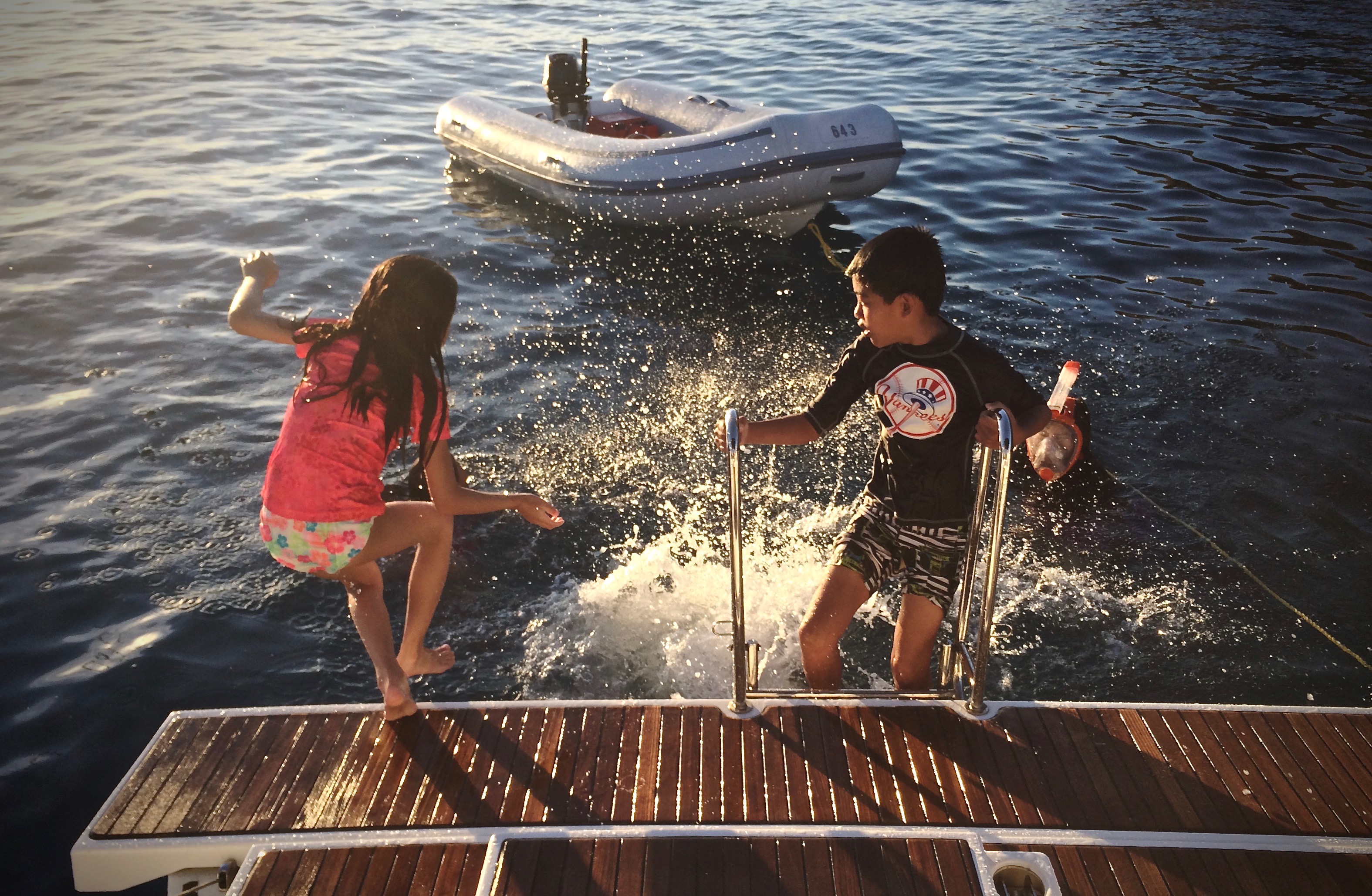
Rinse & repeat. And repeat. This never got old for them.

What didn’t we do?  The Willy T, appropriately.  There’s always the March 18-25 trip (still room for two more people…).


Kids & Parents in the BVI.  it was meant to be, and will be again next year.  Many of you have asked about this; we’ve been preparing for it; and now it’s a reality that we’ll keep exploring with you in the BVI and elsewhere.

See some more pics and clips from this and other trips on our Instagram!